Kate Ryan's Death
Firefly LaneKate Ryan’s death ends her life after breast cancer spreads to her brain and treatment can no longer help. The loss also transforms the novel’s central friendship into an act of final care: Tully stays beside Kate through the last night, while Kate’s farewell to her loved ones gives way to Tully’s work of honoring her wishes and supporting the family.
Causes and Final Illness
The path to Kate’s death begins with a breast change that had persisted for months. During an examination, Dr. Silver noticed a quarter-sized red patch beneath Kate’s right nipple, with skin puckered like an orange peel. Kate recalled that it had started as what seemed to be a bug bite; her family doctor had treated it as an infection with antibiotics, and a mammogram had been clear. Concerned by the discoloration, Dr. Silver arranged an ultrasound immediately.
By the time Kate told Johnny she had cancer, she had chosen her clothes with deliberate care: a pink cashmere sweater given to her by the children and worn Levi’s. She brushed her hair, tied it back, and put on makeup because she wanted to look healthy for the conversation. The small preparations make the diagnosis a spoken fact rather than an abstract fear, even as Johnny’s bright eyes reveal how difficult it is for him to remain strong.
Later, the cancer metastasized to Kate’s brain. After she suffered a minor stroke, surgeons operated, but found nothing they could do. The cancer had affected her mental faculties; Johnny warned Tully that Kate might not recognize her. When Tully proposed contacting a doctor in Ontario whose new drug she had learned about on a breast-cancer program, Kate refused further treatment: she had tried it all, and none of it had worked. What she asked for instead was presence.
The Last Days
Kate’s decline is measured through ordinary capacities becoming uncertain. She loses words, cannot finish sentences, and develops trembling weakness in her fingers. Nausea becomes difficult to bear, and she is persistently chilled. By late July, her pain has led her to nearly double her morphine dosage; the doctor tells her that addiction is no longer the problem. The change from treatment and hope to the management of pain makes the limits of medical intervention part of the family’s daily reality.
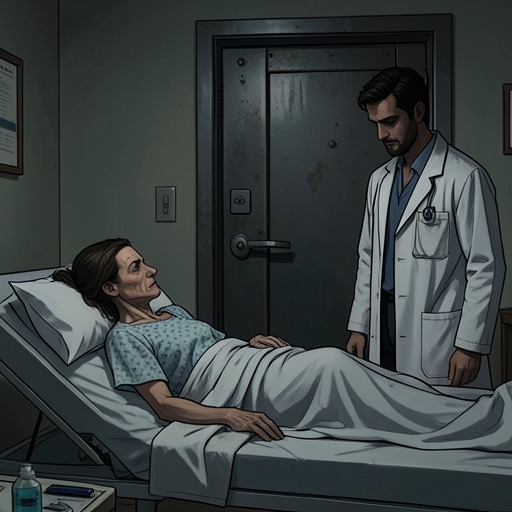
Tully’s response is shaped by both urgency and care. On Kate’s last night in hospital, she persuades Johnny to take the children home and takes his place in the other bed. She pushes her bed across the linoleum until it nearly touches Kate’s, bringing a tape of her final television show. The two watch it together like eighth-grade girls at a sleepover. The broadcast, which had marked Tully’s public decision to leave her show for the sake of family, becomes private company for her closest friend.
That vigil follows an earlier crisis in which Kate is taken to hospital in an ambulance and Tully insists on going with her. Sitting beside Kate, who is conscious but barely responsive, Tully repeats that she is there. When the hospital staff hurry Kate inside and separate them, Tully is left watching her best friend being carried away. The later bedside vigil reverses that separation: Tully cannot change the outcome, but she can remain close.
Death and Farewell
Kate dies on a bleak, rainy October night with the people she loves gathered around her bed. She says goodbye to them one by one, whispering something special to each, then closes her eyes as rain strikes the window and darkness falls. The scene gives her death a deliberate human shape: not simply a medical endpoint, but a final sequence of individual leave-takings shared with those around her.
The loss reverberates through the history of Kate and Tully’s friendship. As a girl, Tully had flinched when Kate first hugged her, unused to being held; once she began to cry, she clung to Kate as though letting go might leave her lost. Later, after Tully disclosed that she had been raped, Kate’s quiet question about whether she was okay met the revelation without judgment. When Tully told Kate that her grandmother had died, Kate held her while she sobbed. These earlier scenes of physical comfort give the final bedside vigil its accumulated meaning: staying with Kate is the last expression of a friendship that repeatedly made room for grief.
Funeral and Aftermath
Kate leaves a final To Do list for her funeral, and Tully follows it to the letter. The Catholic church on the island is filled with photographs, flowers, and friends. Kate has chosen Tully’s favorite flowers rather than her own, a final gesture that turns the arrangements into a sign of the closeness between them.
In the days after the funeral, Tully concentrates on the practical work of carrying out Kate’s wishes and takes care of everything. The Ryans and the Mularkeys sit together on the beach, holding hands and occasionally remembering to talk. The contrast between Tully’s purposeful activity and the families’ subdued gathering shows the immediate aftermath of the loss without pretending that grief is resolved. Kate’s death closes her story, but her final instructions, the shared memories, and the care her friends and family give one another keep her present among them.